THE FIGHT FOR FREEDOM
Crux Publishing, London, 2018
"The fight for freedom – waged by warriors, democrats, politicians, slaves, civil rights leaders, free-thinkers and ordinary human beings – has stirred passions for thousands of years. This moving narrative recounts the exploits of leaders such as Spartacus, Boadicea, Lincoln and Gandhi, through to heroes of the modern age – Martin Luther King, Nelson Mandela and Aung San Suu Kyi.
Their enemies have been despots – for example Persia’s Emperor Xerxes, Stalin and Hitler – but sometimes also religions, ideologies, and even liberation movement leaders who became new tyrants.
Concise and accessible, this book introduces a subject at the forefront of human concerns, and examines its triumphs and the failures. The struggle never ends, and at crucial times it has brought the best out of human beings. Despite setbacks and controversies, the fight for freedom is a heart-warming story of human endeavour that has enriched mankind. Read more here >
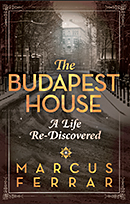
THE BUDAPEST HOUSE: A Life Rediscovered
Crux Publishing, London, 2013
"Marcus Ferrar takes us on a poignant but unsentimental journey through Hungary's darkest hours and their aftermath – one that still resonates through the decades. Ferrar masterfully recounts moving personal stories against their wider historical backdrop and vividly evokes Budapest's haunted past.”
Adam LeBor, correspondent at The Economist
and author of The Budapest Protocol
A Hungarian traumatised by the loss of half her family in
Auschwitz returns to Budapest to retrace her roots. She discovers a dramatic personal history that enables her eventually to shed the burden of her past and move forward to a new life.
This is a true story of human beings caught up in the maelstrom of 20th century history – Nazis genocide, Cold War, dictatorship, and the aftermath of Communism. Told with great sympathy and warmth, this well researched book brings history to life by recounting the experiences of ordinary men and women confronted with daunting challenges.
A FOOT IN BOTH CAMPS: A German Past For Better And For Worse
LBLA Digital, London, 2012
An Anglo-German grows up torn between British wartime heroes and kindly German relatives, resolving his conflict of loyalty only in the ruins of Dresden.
“This lucidly-written book bridges the gap between Britain and Germany with scrupulous analysis and humane sympathy. It is an elegantly concise view of Anglo-German history set in the realities of personal and family existence.” – Jim Reed, Emeritus Professor of German, University of Oxford.
“In this engaging book, Marcus Ferrar combines a personal memoir with a well-informed grasp of the history of both countries and their attitudes towards each other over the past century.” – Iain R. Smith, Emeritus Reader in History, University of Warwick.
“A moving, well-written read.” – Robert Stewart, University of Missouri-Kansas City.
Readers’ comments: “… unputdownable … solid research and a very lucid presentation … a penetrating insight into what makes modern Germany tick … highly recommended … once you start this book, you will be unable to put it down.”
Read an extract
|